The problem BFR solves
There's a brutal window after surgery or serious injury: your quad (or calf, or hamstring) is wasting measurably by the week, but the tissue that was repaired can't yet tolerate the heavy loads that normally build muscle. Traditional rehab bridges the gap with light exercise — which protects the repair but barely slows the muscle loss. That early strength deficit is one of the stronger predictors of a slow, incomplete recovery.
Blood flow restriction closes the gap from the other direction: it makes light exercise count as heavy.
What the cuff actually does
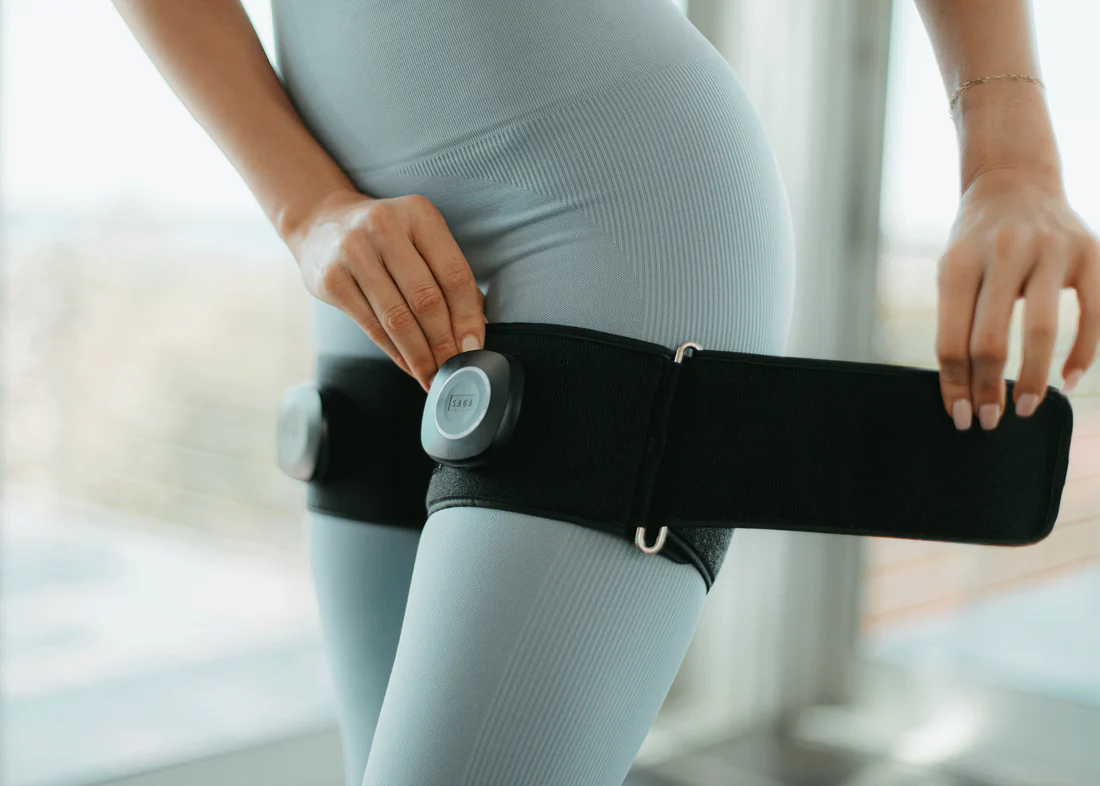
An inflatable cuff — the medical-grade cousin of a blood pressure cuff — is placed at the top of the limb and inflated to a pressure calibrated to you. Arterial inflow continues; venous outflow is partially held back. Exercising in that environment, the muscle floods with metabolic byproducts and runs short on easy oxygen, so the nervous system escalates: it recruits the big fast-twitch fibers that normally sit out light work, and the metabolic stress triggers the same growth signaling as heavy training. Meanwhile the actual load on your healing joint or tendon stays at 20-30% of maximum.
What the research shows
Across musculoskeletal disorders, BFR training produced strength gains comparable to conventional resistance programs — at far lower loads.
View study →In post-surgical patients, low-load BFR improved early strength and muscle preservation versus standard low-load rehab alone.
View study →In older individuals, BFR produced meaningful strength and muscle gains at loads gentle enough for aging joints.
View study →Safety, since you're wondering
Deliberately restricting blood flow sounds alarming, so here's the straight answer: in screened patients, with regulated cuffs and professional supervision, reviews spanning thousands of participants report adverse event rates comparable to ordinary exercise. The three words that matter are screened, regulated, and supervised. We check clotting and vascular risk factors before the first session, pressures are calibrated per limb rather than guessed, and nobody trains under a cuff here without a Doctor of Physical Therapy present.