Why steel, of all things
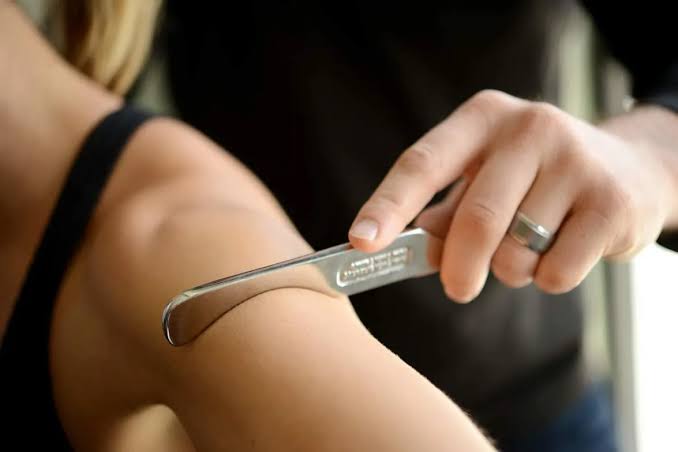
Run a fingertip over restricted tissue and you'll feel... not much. Run a rigid steel edge over the same spot and it hums — the instrument amplifies texture the way a stethoscope amplifies sound. That's the first half of IASTM: the tool is a diagnostic device, letting your therapist map exactly where tissue has become gritty, thickened, or stuck to the layer beneath it.
The second half is treatment. The beveled edge concentrates force into a line a few millimeters wide, at a controlled depth and angle, stroke after stroke, without the fatigue that limits thumbs and knuckles. Over a treatment area the goal is a controlled dose of mechanical stimulus — enough to trigger increased local blood flow and a remodeling response in the tissue, not enough to injure it.
An honest read of the evidence
We like IASTM and we use it weekly — and we'll still tell you the research picture is modest. The most consistent finding across systematic reviews is improved joint range of motion in the short term; effects on pain are smaller and less consistent when IASTM is used alone. That's not a reason to skip it. It's a reason to use it the way the evidence supports: as a preparatory tool that opens motion so loading and retraining can do the lasting work.
Effect-size analysis across trials: IASTM produced consistent short-term range of motion improvements, with smaller effects on pain and function.
View study →Across musculoskeletal pain conditions, IASTM showed benefit particularly when combined with active treatment approaches.
View study →Where we reach for the tools
- Chronic tendinopathy — tennis and golfer's elbow, Achilles and patellar tendon problems that have gone fibrotic
- Scar tissue — post-surgical adhesions and old injury scars that tether skin and fascia
- Plantar heel pain — the fascia responds well to instrument work plus calf loading
- Fibrotic muscle tightness — long-standing restrictions with that characteristic gritty texture