TECHNIQUE

Cupping Therapy

Every other tool in the clinic pushes tissue down. Cupping is the one that lifts it up — and for compressed, pressure-sensitive tissue, that direction matters.

AT A GLANCE

Dry cupping uses suction to lift skin and the fascia beneath it, increasing local blood flow and letting stuck layers glide again. Trials show modest short-term pain relief — best documented in the low back — and it earns its spot in our sessions as preparation and relief work around exercise, not as a stand-alone fix. Yes, it leaves circles. No, they're not toxins.

The only tool that pulls

Consider what most soft tissue treatment has in common: thumbs, elbows, steel tools, foam rollers — all compression. Cupping inverts the equation. A cup is placed on the skin and air is drawn out, so the tissue inside the rim lifts. Skin separates slightly from superficial fascia, fascia from muscle, and fluid moves through tissue that has been sitting compressed and congested.

That lift does a few useful things at once: it brings a rush of blood to the area, it creates shear between tissue layers that have stopped gliding, and it gives the nervous system a strong, novel input that can dial down local sensitivity. With sliding cupping, the cup travels across lubricated skin, turning a single point of lift into a moving wave of decompression along a whole muscle group.
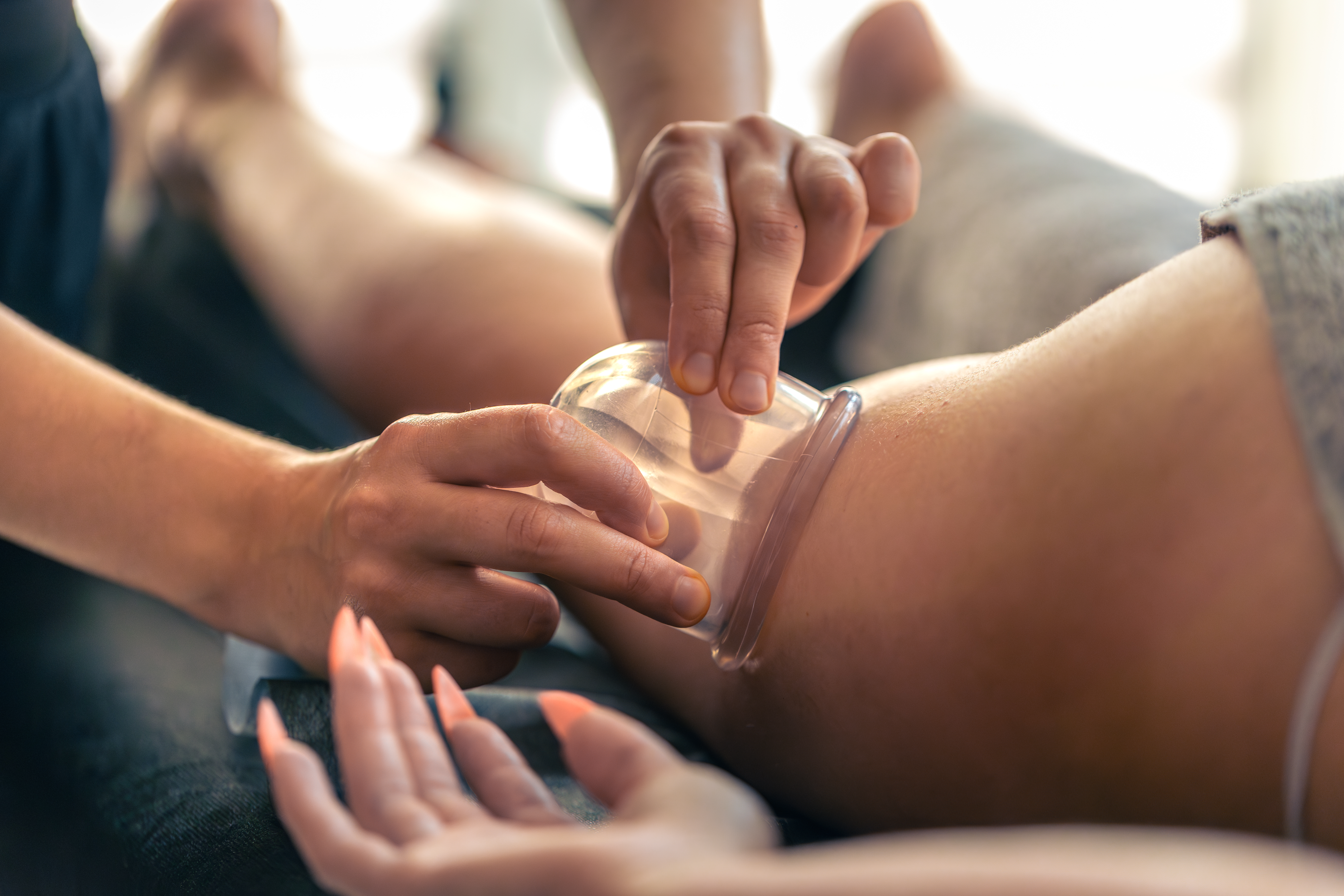
Sliding cupping along the outer thigh
Sliding cupping: a moving wave of decompression along the tissue.

About those circles

The marks are the most famous thing about cupping, so let's be precise: suction draws a small amount of blood into the superficial capillaries, leaving a round discoloration that fades over days. It's a pressure mark, not extracted toxins and not a bruise from injury. Darker circles mean stronger suction or more reactive skin — not a more effective treatment. If you'd rather avoid visible marks for an event, tell us; suction strength is adjustable.

What the trials show

Cupping's evidence base has grown substantially, and it deserves a fair, unspun summary: real but modest short-term benefits for musculoskeletal pain, strongest for low back pain, with sham-controlled trials suggesting part of the effect rides on expectation. Used honestly — as an adjunct that makes tissue feel and move better so active care can proceed — it holds its place.

META-ANALYSIS · CHRONIC MSK PAIN

Across randomized trials of chronic musculoskeletal pain, cupping therapy reduced pain intensity versus control conditions in the short term.

View study →
META-ANALYSIS · LOW BACK PAIN

Pooled randomized controlled trials found cupping effective for reducing low back pain and improving function versus usual care.

View study →
SYSTEMATIC REVIEW · VS PLACEBO

Against sham cupping, effects shrink — a reminder to use cupping as a supporting tool rather than a headline treatment.

View study →
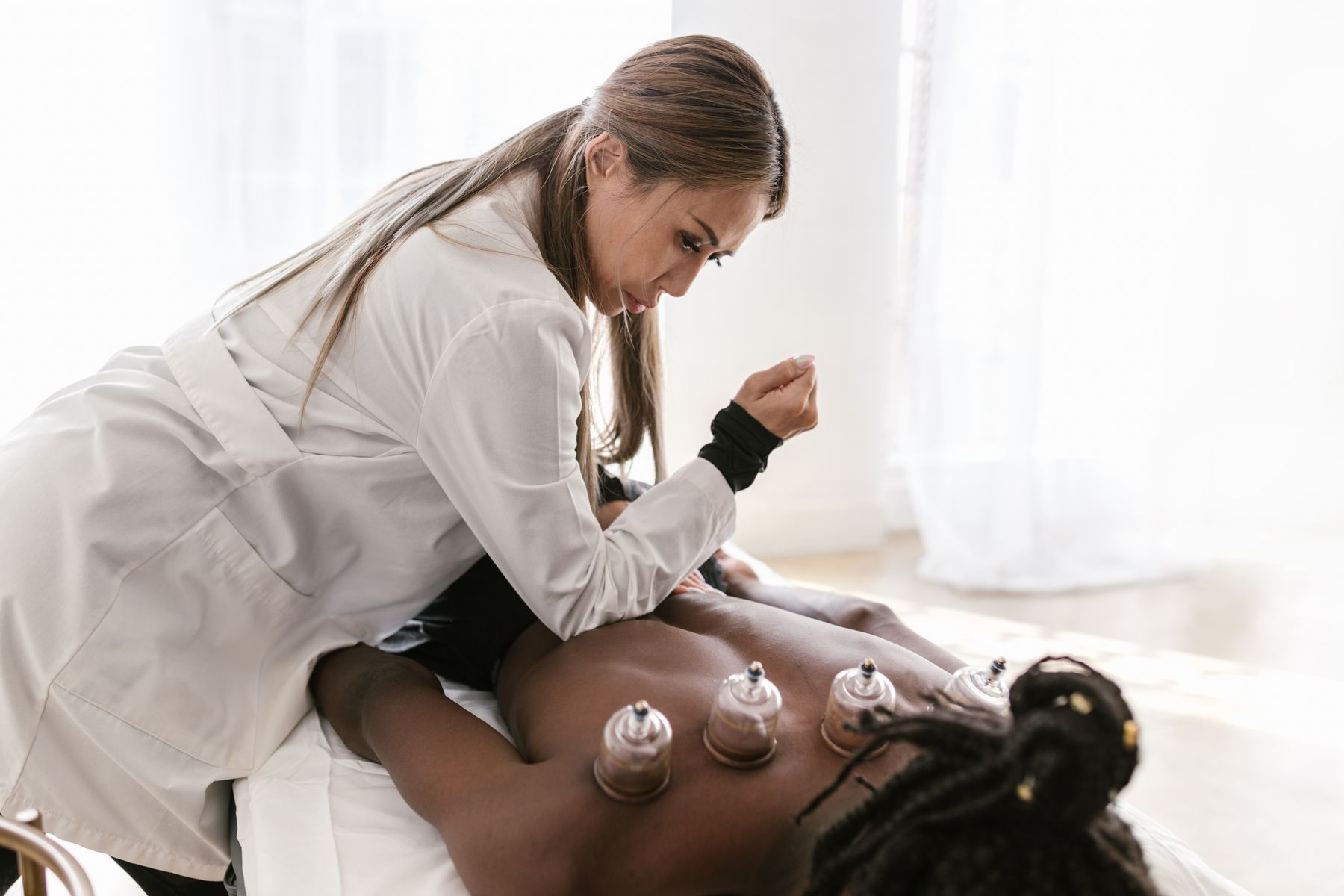
Where cupping fits in a session

Cupping takes minutes, feels good, and sets up the work that follows. In a 45-minute one-on-one visit, that's exactly the role it plays.

  • Pressure-sensitive tissue: when an area is too irritable for deep compression, lifting is the way in.
  • Before exercise: decompression as a warm-up act, so loading happens on tissue that's already moving.
  • Alongside movement: cups applied while you actively move the joint — combining decompression with retraining.
  • Suction dosed to you: from barely-there to strong, and adjusted if you'd rather skip the marks.

Often paired with

Cupping therapy applied to the back
01 — SELECT
Right tissue, right tool

We use cupping where lift will help — not everywhere, and not by default.

02 — DECOMPRESS
Lift and move

Static or sliding cups, often combined with active movement under suction.

03 — TRAIN
Use the window

Looser, less sensitive tissue goes straight into the exercise portion of your visit.

Frequently asked questions

What do the round marks actually mean?+
Suction pulls a small amount of blood into the superficial capillaries — the mark is closer to a hickey than a bruise, and it isn't "toxins leaving the body." Marks range from pink to deep red depending on suction strength and your skin, and they fade over several days. They don't indicate how well the treatment worked.
Does cupping actually do anything, or is it a fad?+
The randomized-trial evidence shows modest, real short-term reductions in musculoskeletal pain — clearest for low back pain — with an important caveat: trials against convincing sham cupping show smaller differences, meaning expectation plays a role. We're upfront about that, and we use cupping as a supporting tool around active care, never as the plan itself.
Does it hurt?+
Most people describe a strong pulling or stretching sensation that settles into something oddly relaxing within a minute. Sliding cupping — moving the cup over lubricated skin — feels like a deep massage stroke in reverse. Nothing about it should feel sharp.
When would my therapist choose cupping over massage or needling?+
When tissue seems compressed, congested, or sensitive to pressure. Because cupping lifts instead of presses, it can mobilize skin and superficial fascia in areas too irritable for deep pressure work — and it pairs well before exercise, when we want tissue moving and desensitized.
ONE PATIENT, ONE HOUR, ONE FOCUS

Curious whether cupping belongs in your plan?

Ask at your evaluation — every tool here earns its place. No referral needed in Idaho.

Ryan Zumwalt
DPT · DOCTOR OF PHYSICAL THERAPY

Ryan Zumwalt, DPT practices at Post Falls Physical Therapy in Post Falls, Idaho, where every session is one-on-one with the same Doctor of Physical Therapy.

SOURCES

  1. Effects of cupping therapy on chronic musculoskeletal pain and collateral problems: a systematic review and meta-analysis. pmc.ncbi.nlm.nih.gov
  2. The effectiveness of cupping therapy on low back pain: A systematic review and meta-analysis of randomized controlled trials. pubmed.ncbi.nlm.nih.gov
  3. The Efficacy of Dry Cupping Compared to Placebo Cupping for People With Musculoskeletal Complaints: A Systematic Review. JOSPT Open, 2025. jospt.org