SPECIALTY

Manual Therapy

Trained hands can find what imaging misses and change what machines can't. This is the hands-on core of how we treat — and the honest story of what it does.

AT A GLANCE

Manual therapy is the umbrella for skilled hands-on treatment: graded joint mobilization, higher-velocity manipulation, and targeted soft tissue techniques. Research consistently shows it works best combined with exercise — which is exactly how it's delivered here: hands-on work to reduce pain and restore motion, immediately followed by the training that makes the change permanent.

Hands are instruments — twice over

Before hands treat anything, they measure. A skilled clinician moving your joint through its range learns things no scan reports: which direction is stiff, which segment guards, what reproduces your symptom and what relieves it. Manual therapy starts as assessment, and the treatment that follows is aimed by what the assessment found.

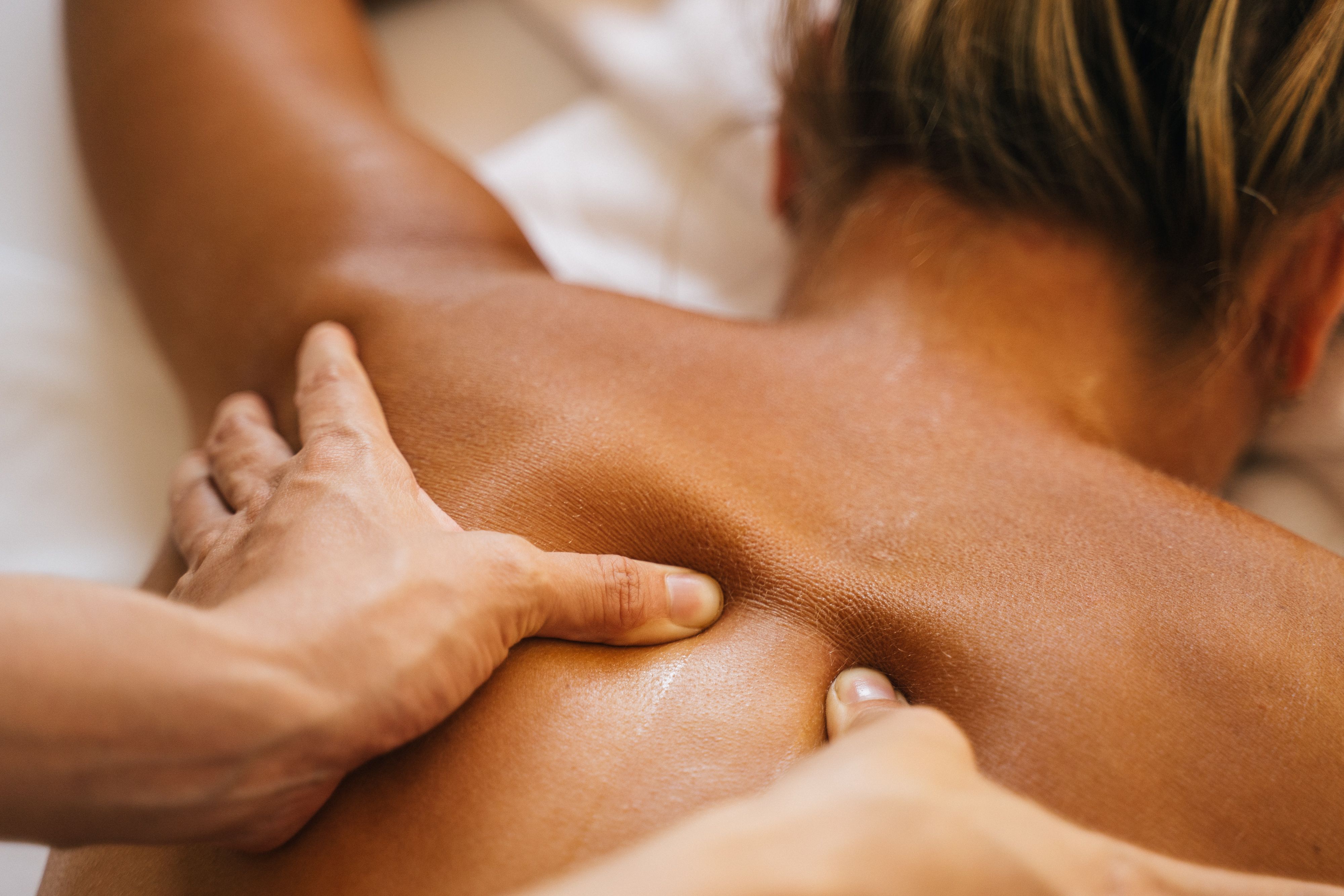
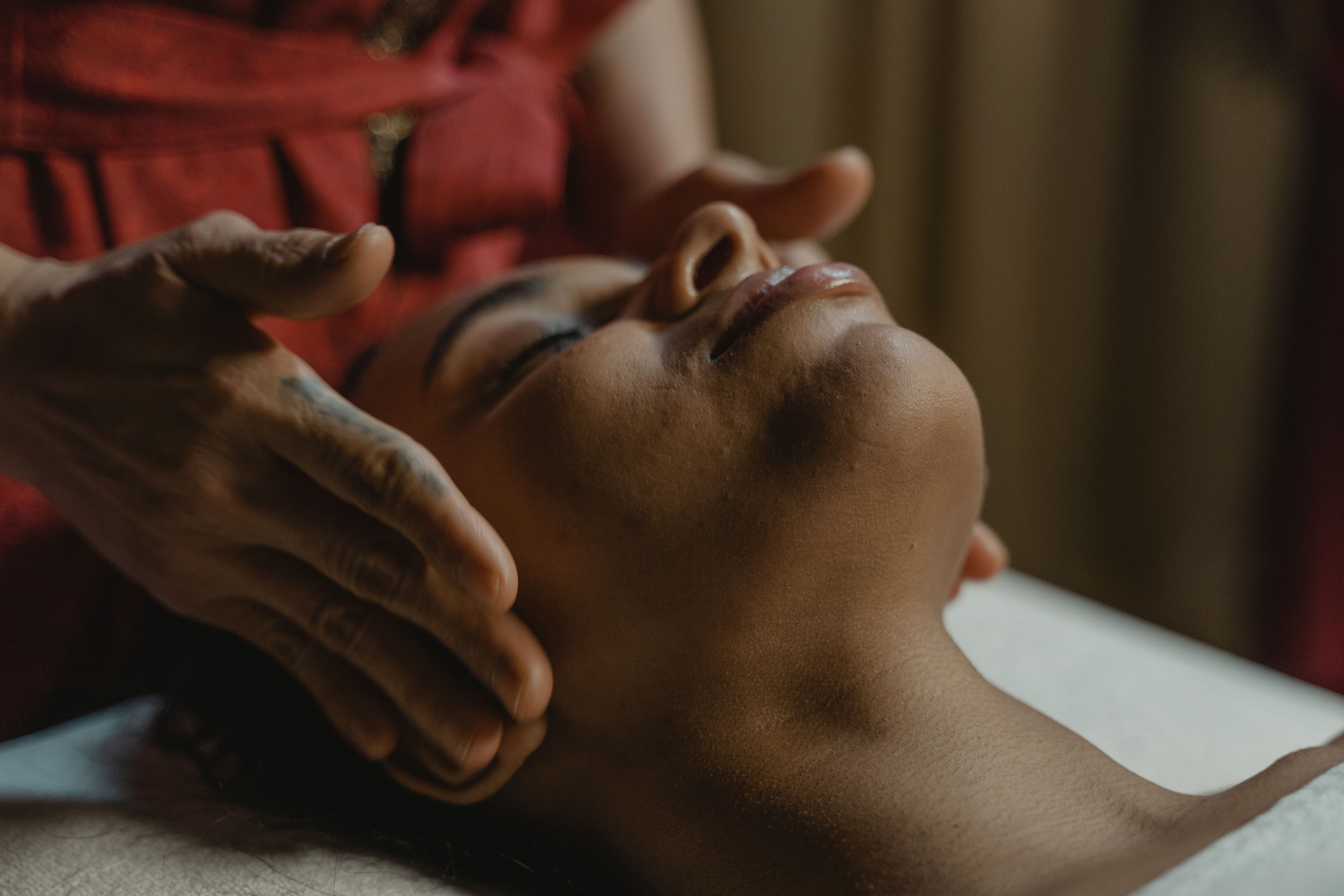
Then the same hands become the treatment. Depending on what your joint needs, that might be mobilization — slow, rhythmic, graded oscillations that coax a stiff joint through range — or manipulation, a quick, precise impulse that often comes with the familiar pop. Around the joints, soft tissue techniques address the muscles and fascia that guard and tighten in response to joint problems.
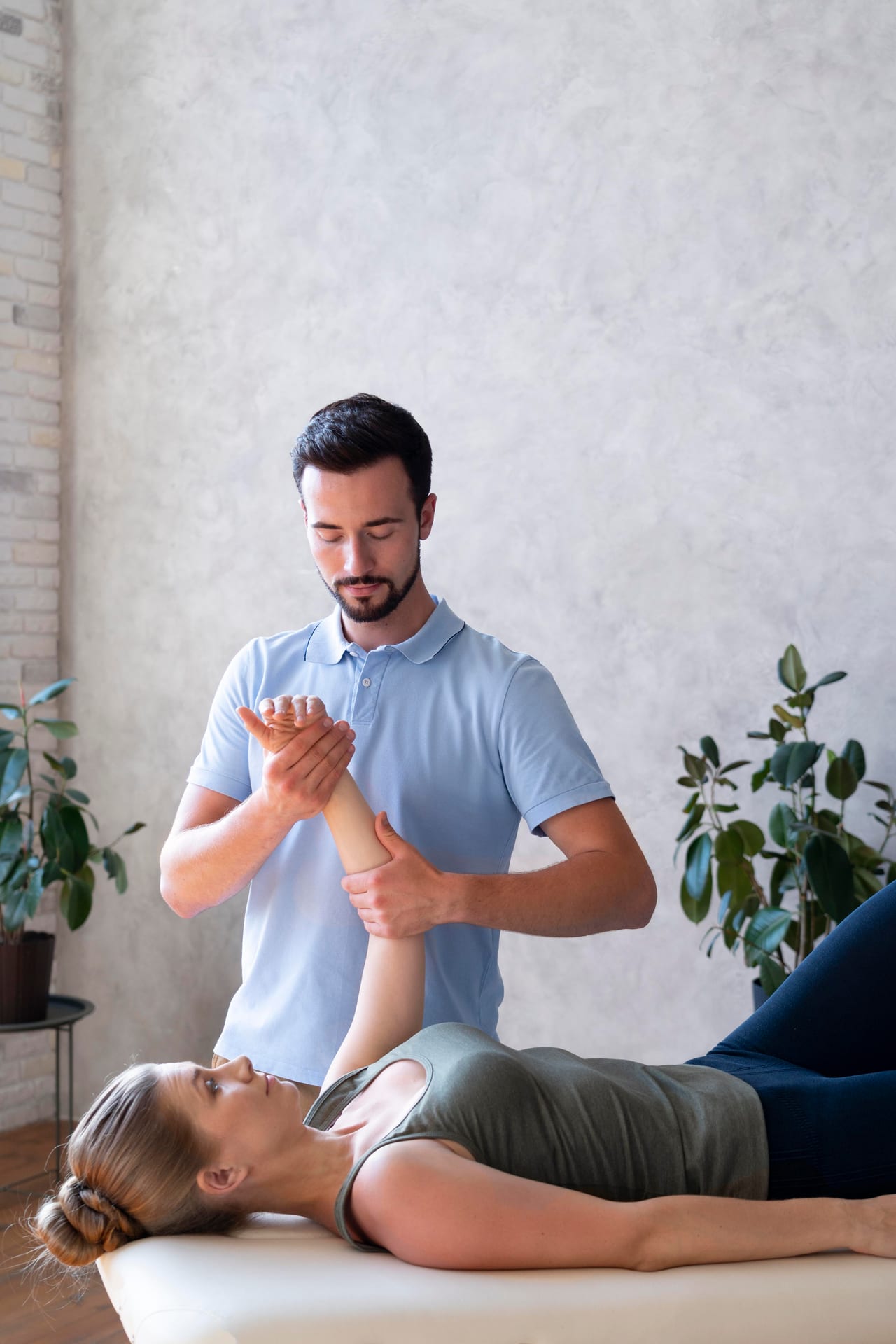
Therapist performing hands-on treatment
Assessment and treatment, from the same pair of hands.

What hands-on treatment actually changes

Here's the current scientific understanding, without the mystique: manual therapy reduces pain sensitivity through the nervous system, decreases protective muscle guarding, and restores joint motion. What it does not do is put bones "back in place" — they weren't out — or permanently lengthen tissue in a single session. The changes are real but perishable, which is precisely why every hands-on technique in this clinic is followed by exercise that trains the body to keep the improvement.

The evidence for pairing it with exercise

META-ANALYSIS · LOW BACK PAIN

Combining manual therapy with exercise improved pain and disability in nonspecific low back pain beyond either alone.

View study →
SYSTEMATIC REVIEW · SPINE

Spinal manipulation and mobilization are evidence-supported options for low back and neck pain across systematic reviews.

View study →
NETWORK META-ANALYSIS · NECK

Musculoskeletal manipulations improved pain in patients with neck pain across randomized comparisons.

View study →

Problems that respond well

Hands-on care with an exit strategy

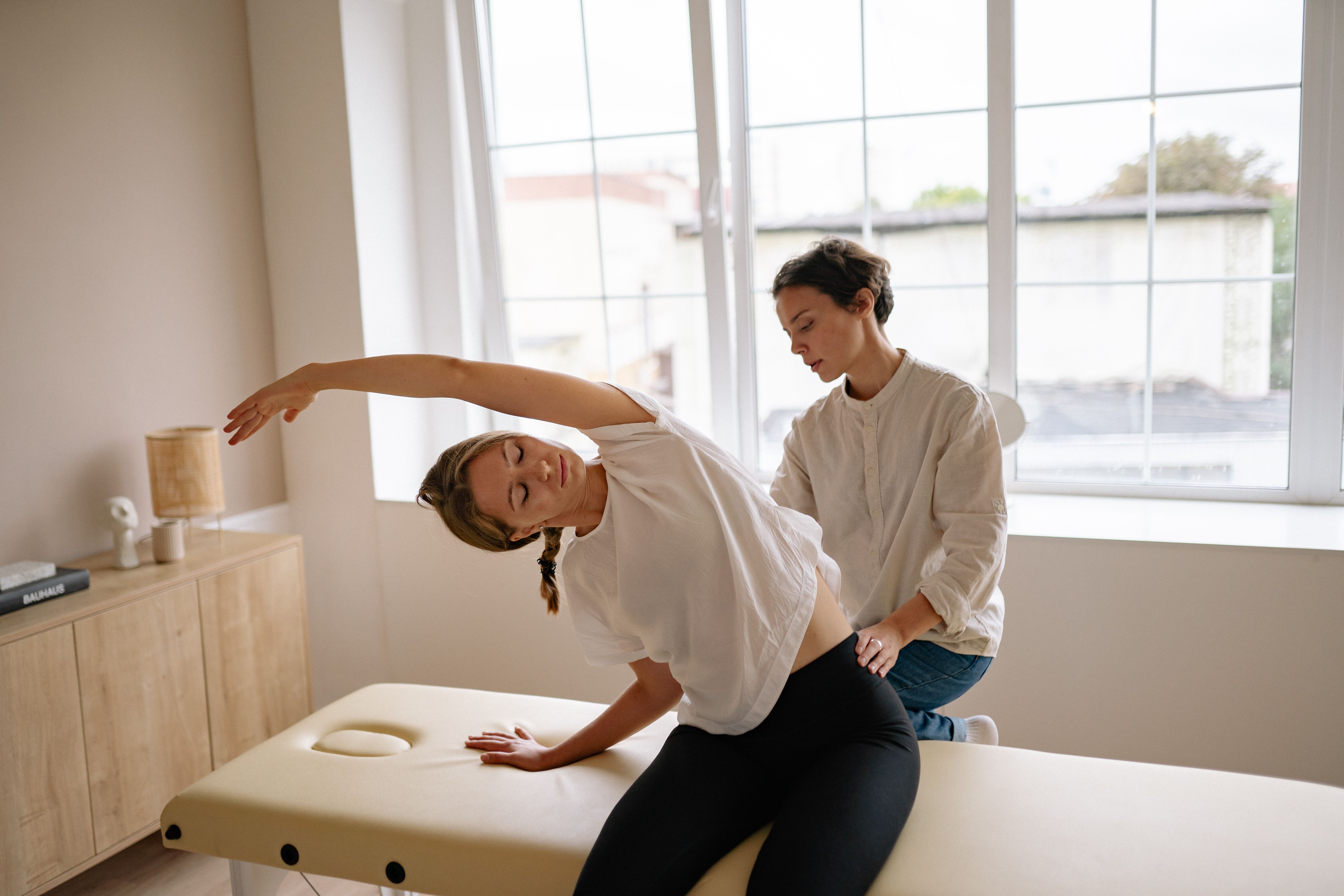
The 45-minute one-on-one format exists partly for this: enough time for real manual work and the exercise that follows, in the same visit, every visit.

  • Technique matched to the joint: gentle mobilization, manipulation, or soft tissue work — chosen by exam, not routine.
  • Consent and comfort first: nothing high-velocity happens without screening and your explicit OK.
  • The window gets used: reduced pain and fresh mobility flow straight into retraining.
  • Progress means less of it: as you improve, hands-on time shrinks and independence grows — by design.

Often paired with

Manual therapy treatment session
01 — FEEL
Assess by hand

Joint-by-joint examination to find the stiff, guarded, and symptomatic segments.

02 — FREE
Restore the motion

Mobilization, manipulation, and soft tissue work matched to what the exam found.

03 — FORTIFY
Train the change

Exercise in the same session so the new motion becomes your new normal.

Frequently asked questions

What is the popping sound when a joint is adjusted?+
Gas bubbles forming in the joint fluid as pressure suddenly changes — a phenomenon called cavitation. Nothing goes "back in place"; nothing was out of place. The pop is harmless and often accompanies a quick drop in muscle guarding and pain, but the sound itself isn't the treatment, and plenty of effective techniques produce no sound at all.
How is this different from seeing a chiropractor?+
The overlap is real — both professions use joint manipulation. The difference is the surrounding plan. In our clinic, hands-on treatment opens a window that gets filled with exercise, retraining, and a planned discharge; the goal is for you to stop needing us. If ongoing maintenance visits are the model, that's a different philosophy than ours.
Why does relief from hands-on treatment wear off?+
Because manual therapy changes sensitivity and mobility, not strength or habits. It quiets the alarm; it doesn't fix why the alarm kept ringing. That's not a flaw — it's the reason we use the post-treatment window for the loading and movement work that produces lasting change. Hands-on care alone is a rental; paired with exercise, it's a down payment.
Is spinal manipulation safe?+
For appropriately screened patients, serious complications are rare, and we screen carefully — reviewing red flags, vascular risk factors, and your history before using higher-velocity techniques. There are also always alternatives: gentler mobilizations can accomplish similar goals for patients who aren't candidates for, or simply don't like, manipulation.
ONE PATIENT, ONE HOUR, ONE FOCUS

Get hands-on care with a plan behind it.

Skilled manual therapy inside one-on-one sessions — no referral needed in Idaho.

Ryan Zumwalt
DPT · DOCTOR OF PHYSICAL THERAPY

Ryan Zumwalt, DPT practices at Post Falls Physical Therapy in Post Falls, Idaho, where every session is one-on-one with the same Doctor of Physical Therapy.

SOURCES

  1. The combined effects of manual therapy and exercise on pain and related disability for individuals with nonspecific low back pain. pmc.ncbi.nlm.nih.gov
  2. Efficacy of spinal manipulation and mobilization for low back pain and neck pain: a systematic review and best evidence synthesis. Spine J. pubmed.ncbi.nlm.nih.gov
  3. Effectiveness of musculoskeletal manipulations in patients with neck pain: a systematic review and network meta-analysis. pmc.ncbi.nlm.nih.gov