SPECIALTY

Pelvic Floor Therapy

The problems nobody talks about are some of the most fixable ones we treat. Private, unhurried, consent-first care — for women and men.

AT A GLANCE

The pelvic floor is a working muscle group like any other — it can be weak, overactive, poorly coordinated, or injured, and each problem has a treatment. Leakage with laughing or lifting, pelvic pain, heaviness, urgency, postpartum changes, post-prostatectomy leakage: all of it is assessed and treated here in private one-on-one sessions where you control the pace and nothing happens without your consent.

Common is not the same as normal

Somewhere along the way, a myth took hold: that leaking when you sneeze is just the price of childbirth, that pelvic pressure is just aging, that urgency is just how your bladder is. The numbers are real — about one in three women experience urinary incontinence after childbirth — but the resignation isn't warranted. These are muscle and coordination problems, and muscle and coordination problems respond to training. The evidence isn't marginal, either: pelvic floor muscle training is backed by Cochrane review and sits as first-line treatment in international guidelines.

Weak isn't the only problem

Here's what separates pelvic floor care from a Kegel handout: these muscles fail in two directions. Some floors are genuinely weak and need strengthening. Others are clenched — held in constant guard, producing pain, urgency, and even leakage that more squeezing makes worse. Prescribing Kegels to an overactive pelvic floor is like prescribing shrugs to a tense neck. The assessment exists to find out which pattern is yours before any exercise is assigned.

New mother at home with her baby
Postpartum recovery is rehab — and it deserves the same rigor as any other.

Who ends up in this room

The evidence base

COCHRANE REVIEW

Pelvic floor muscle training prevents and treats urinary incontinence — the gold-standard review behind first-line guideline recommendations.

View study →


How we've built this service

Pelvic health requires something high-volume clinics can't offer: privacy, time, and trust. Ours is built on all three.

  • Private room, full session: 45 uninterrupted minutes with the same therapist, every visit.
  • Consent at every step: internal assessment is one option, never a requirement — external and biofeedback-based approaches work too.
  • Whole-system treatment: breathing, core pressure management, hips, and habits — not just isolated squeezes.
  • Real-life goals: plans aim at trampolines, deadlifts, road trips, and sleep — not just symptom scores.

Often paired with

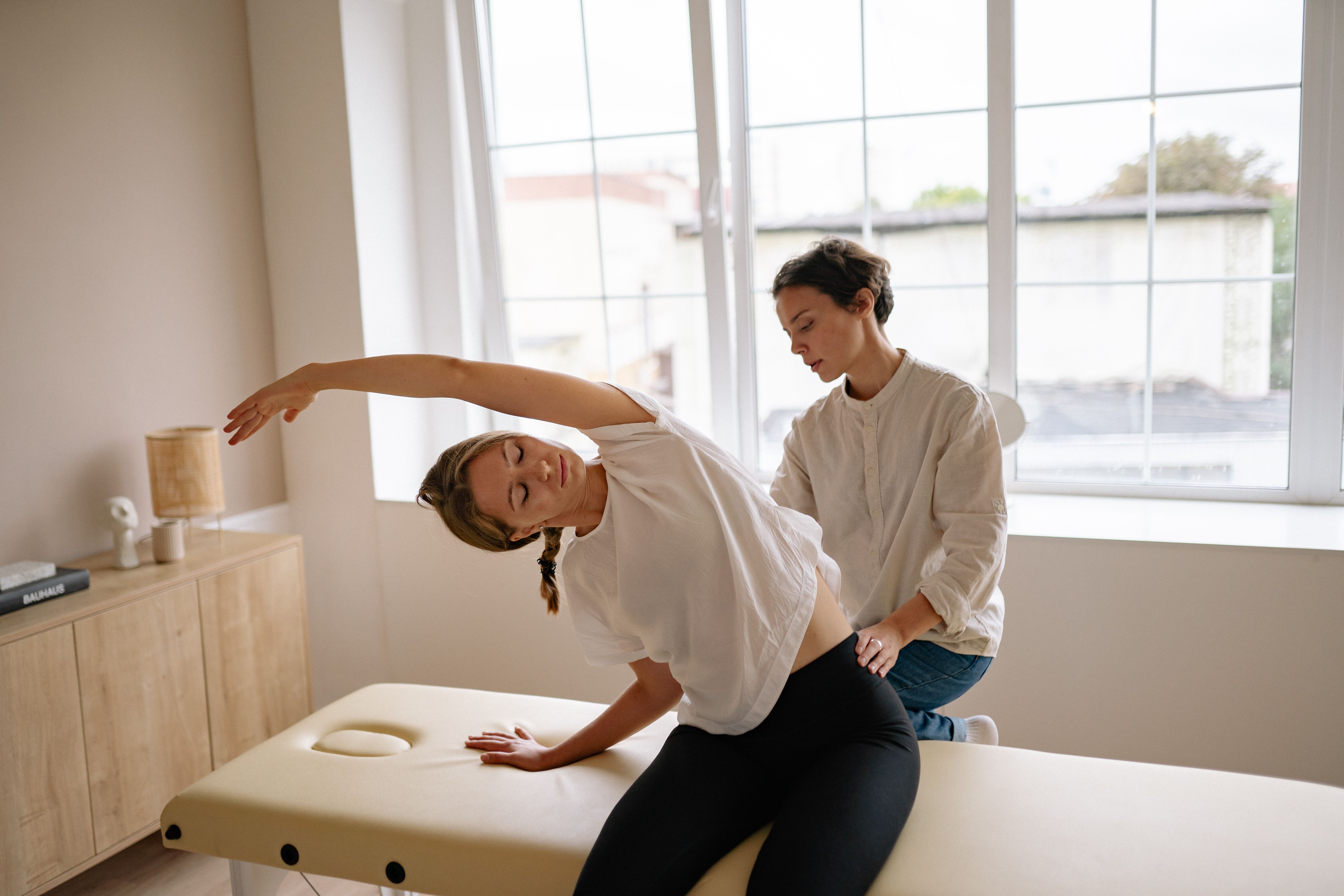
Private one-on-one physical therapy session
01 — UNDERSTAND
Assess on your terms

A private evaluation that identifies weak, overactive, or uncoordinated patterns — at whatever pace you set.

02 — RETRAIN
Train the right thing

Strengthening, relaxation, or coordination work — matched to your actual pattern, often with biofeedback.

03 — RECLAIM
Back to your life

Progressive return to exercise, lifting, and daily life without planning around a bladder.

Frequently asked questions

Everyone told me leaking is just part of having kids. Is it?+
It's common — roughly one in three women experience leakage after childbirth — but common isn't the same as permanent. Cochrane-reviewed evidence shows structured pelvic floor muscle training treats and prevents incontinence, and it's first-line care in clinical guidelines worldwide. Most patients are startled by how treatable this actually is.
Does every session involve an internal exam?+
No. Internal assessment is the most precise way to evaluate these muscles, but it is optional, always explained first, and only done with your consent — at your pace or not at all. Meaningful progress can be made with external work, breathing and pressure-management training, and habit changes. You set the boundaries; we work within them.
I've done a thousand Kegels. Why am I not better?+
Three common reasons: many people do Kegels incorrectly without feedback; some pelvic floors are actually overactive and need to learn to relax before strengthening helps; and squeezes alone don't integrate the pelvic floor with breathing, core pressure, and real-life movement. An assessment tells us which of these applies to you — guessing is what got the Kegels wasted.
Do men come to pelvic floor therapy?+
Regularly. The most common reasons are leakage after prostate surgery, chronic pelvic pain, and urinary urgency or frequency. The muscles are the same, the evaluation is the same private, consent-based process, and the evidence for training-based treatment is just as solid.
ONE PATIENT, ONE HOUR, ONE FOCUS

You don't have to plan your life around this.

Private, consent-first pelvic floor care — no referral needed in Idaho.

Ryan Zumwalt
DPT · DOCTOR OF PHYSICAL THERAPY

Ryan Zumwalt, DPT practices at Post Falls Physical Therapy in Post Falls, Idaho, where every session is one-on-one with the same Doctor of Physical Therapy.

SOURCES

  1. Woodley SJ, et al. Pelvic floor muscle training for preventing and treating urinary and faecal incontinence in antenatal and postnatal women. Cochrane Database Syst Rev. cochranelibrary.com
  2. Direct Access Laws by State. WebPT. webpt.com