Not all dizziness is the same dizziness
Spinning with position changes — rolling over in bed, looking up at a shelf — points to BPPV: calcium crystals that have escaped into an inner-ear canal where they don't belong. Fog, motion sensitivity, and symptoms after a head knock point to post-concussion vestibular dysfunction — the hardware is intact, but the brain is mis-processing its balance inputs. Unsteadiness with neck pain or after whiplash suggests cervicogenic dizziness, where the upper neck is feeding bad position data into the system.
The distinctions matter because the treatments differ completely — a repositioning maneuver for one, graded retraining for another, neck treatment for the third. That's why the evaluation comes first, testing eyes, ears, neck, and balance systematically until your dizziness has a name.
Retire the dark room
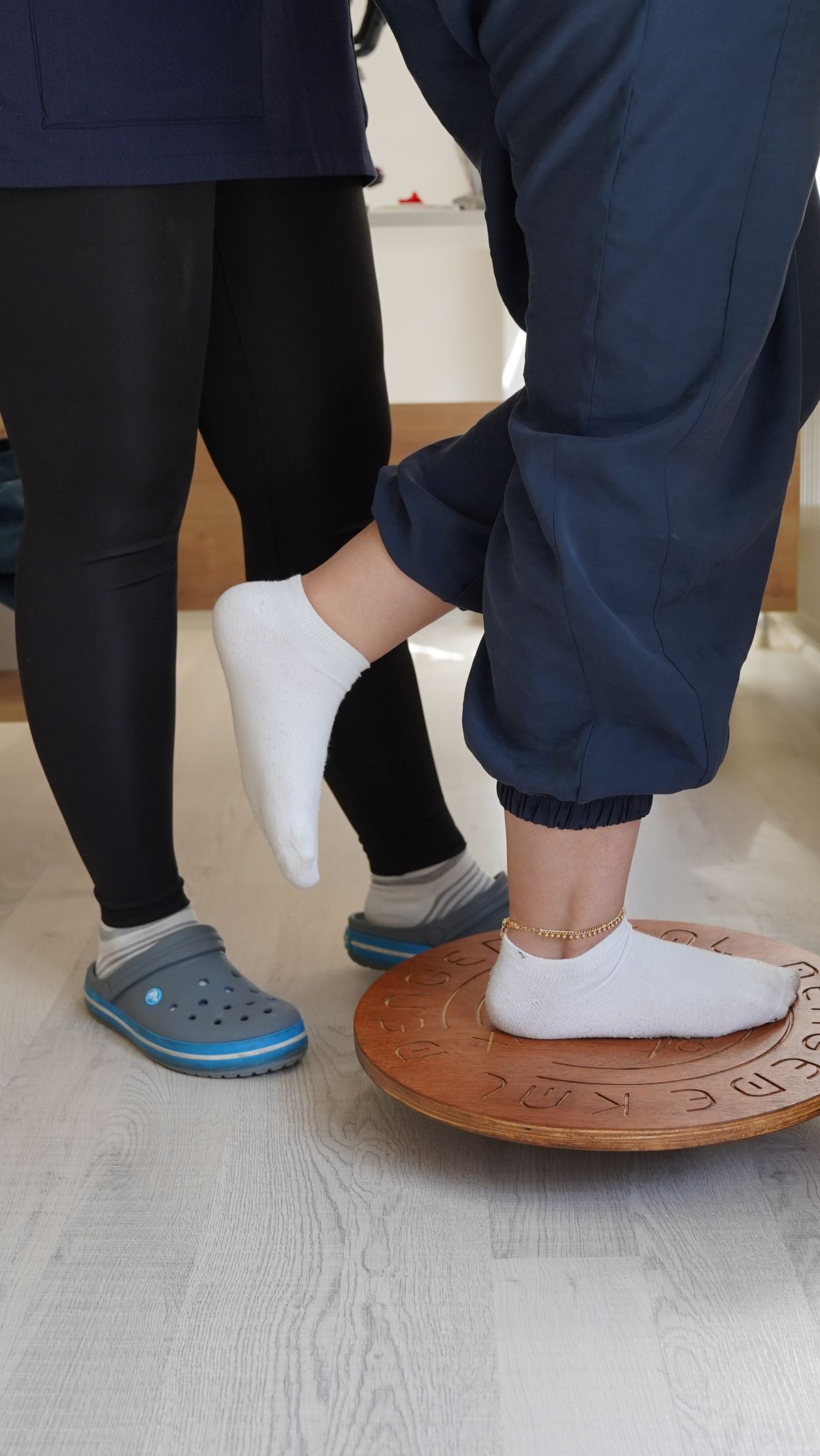
For years, concussion advice was to rest in a dim room until symptoms disappeared. The evidence has moved decisively past that: after a brief initial rest period, graded activity and targeted vestibular exercise outperform prolonged rest, and extended isolation can actually prolong symptoms. Recovery is active. Gaze stabilization drills, balance progressions, controlled motion exposure, and structured return of exercise tolerance — each dosed so the system adapts without being overwhelmed.
The evidence
Vestibular rehabilitation is safe and effective for vestibular dysfunction, with moderate-to-strong evidence across randomized trials.
View study →Who we help
- People with positional vertigo — often resolvable in a handful of visits
- Athletes and students with lingering post-concussion symptoms
- Anyone whose dizziness has them avoiding driving, stores, or stairs
- Patients with whiplash-related unsteadiness and visual motion sensitivity
- Older adults whose balance confidence is shrinking their world